
The documents, as the lab issued them
Most brands mention testing in a footer and hope you stop reading there. We would rather hand you the paperwork. The laboratory reports and the facility certificates are on this page as documents you can open, zoom into and question. Read them the way you would read anything from a stranger asking for your money.
A certificate of analysis proves less than you think
Lab-created shilajit passes lab tests perfectly. It was built to the spec, so of course it does.
When a sample arrives at a laboratory, the lab is told what it is. Their instruments measure heavy metals such as lead and arsenic, microbes and contaminants. No instrument on earth answers the question you actually care about, which is whether the material ever came out of a mountain. That answer lives in the harvest, the raw stones, the filtration and the drying beds, and we keep the evidence for all four on our process page.
What a report does tell you
- Heavy metals are within safe limits for the sample tested.
- Microbiology is clean for the sample tested.
- The fulvic acid content of that sample, by whatever method the lab used.
- That somebody, somewhere, sent something to a laboratory.
What it does not tell you
- Whether the material came out of a mountain or out of a factory.
- Whether fulvic acid was bought by the kilo and stirred into a paste to inflate the number.
- Whether the sample tested has anything to do with the jar you were sold.
- Whether it was heat-dried in an afternoon or sun-dried over two months.
Every report we hold, newest first
Five years of testing, seven reports, five laboratories on three continents — Pakistan, Australia, France, India, the United States and the UAE. Heavy metals on every format, plus the fulvic and humic acid panels people keep asking about. Nothing retyped, nothing curated out. Open any of them and check the letterhead.
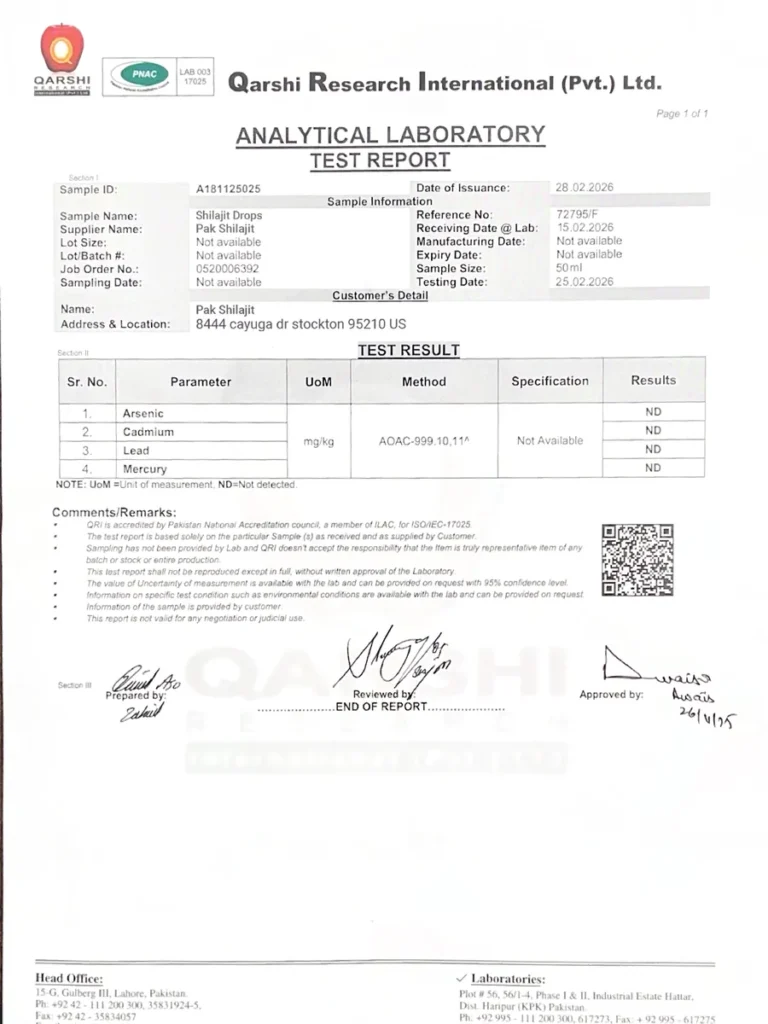
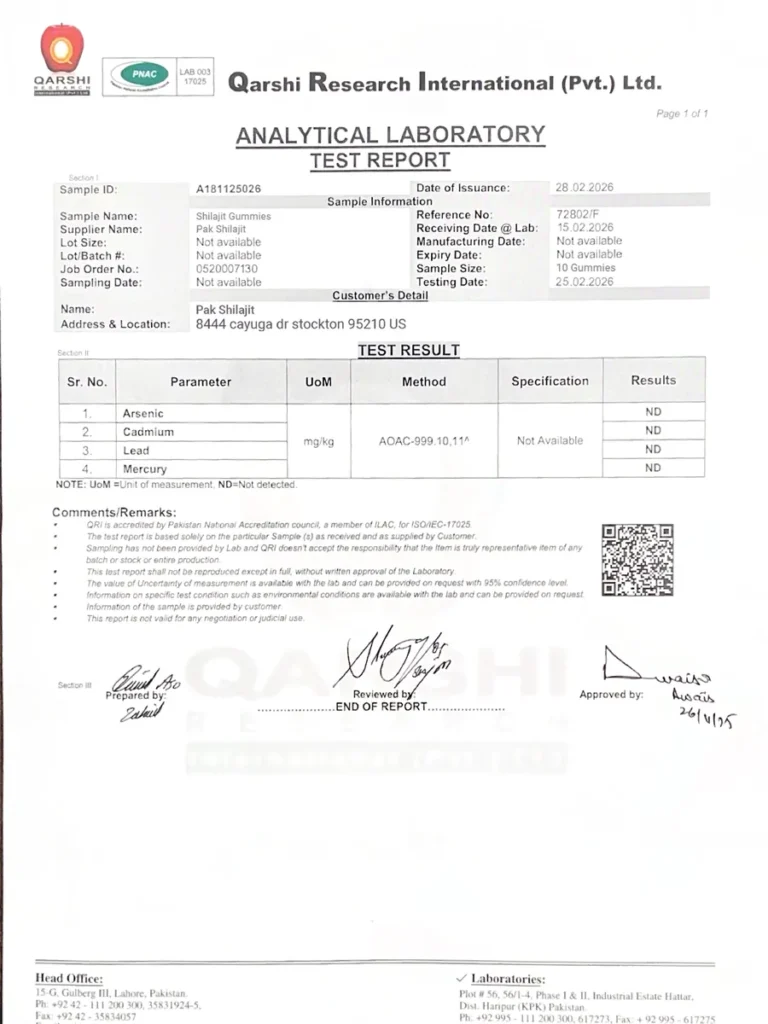
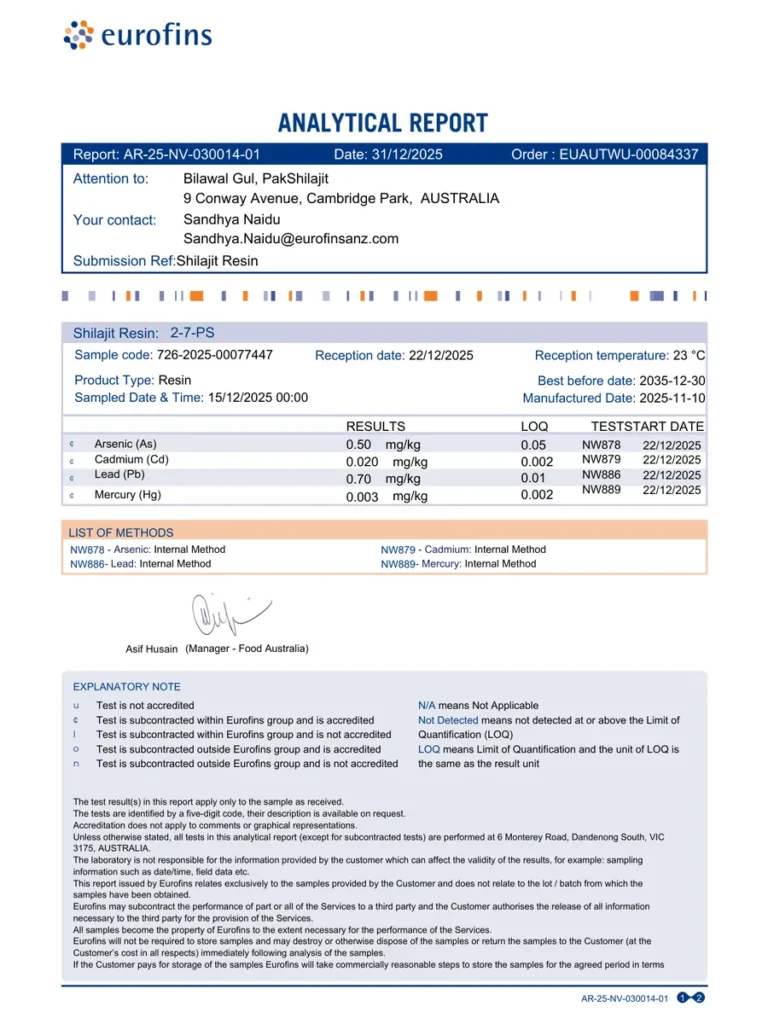
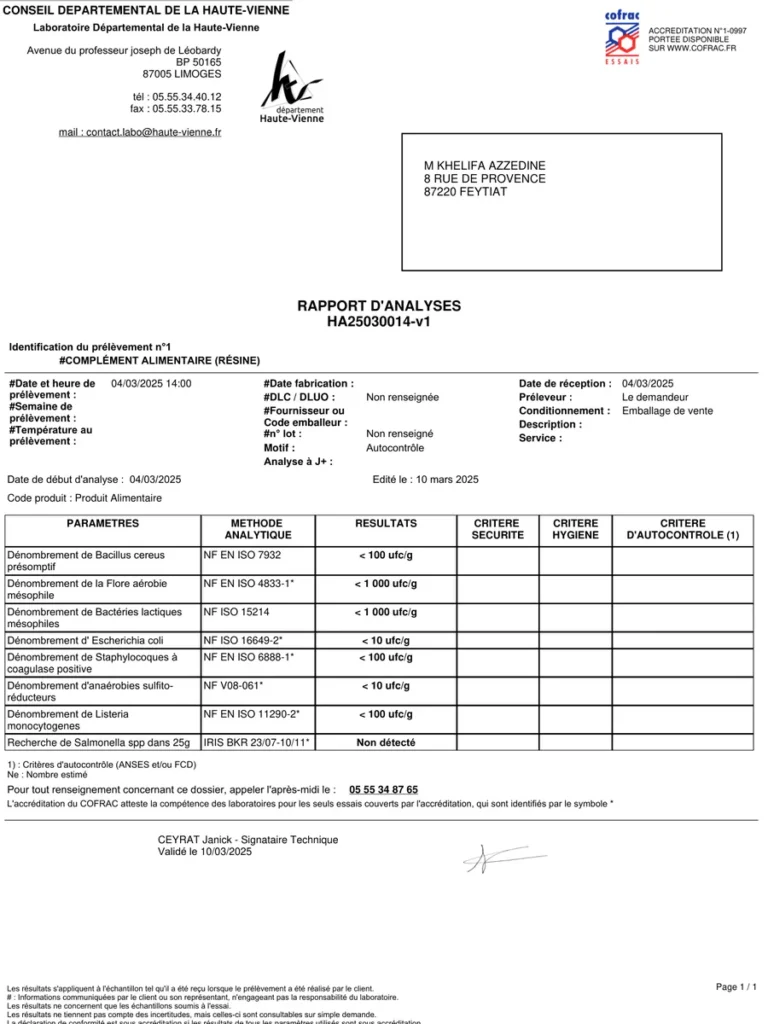
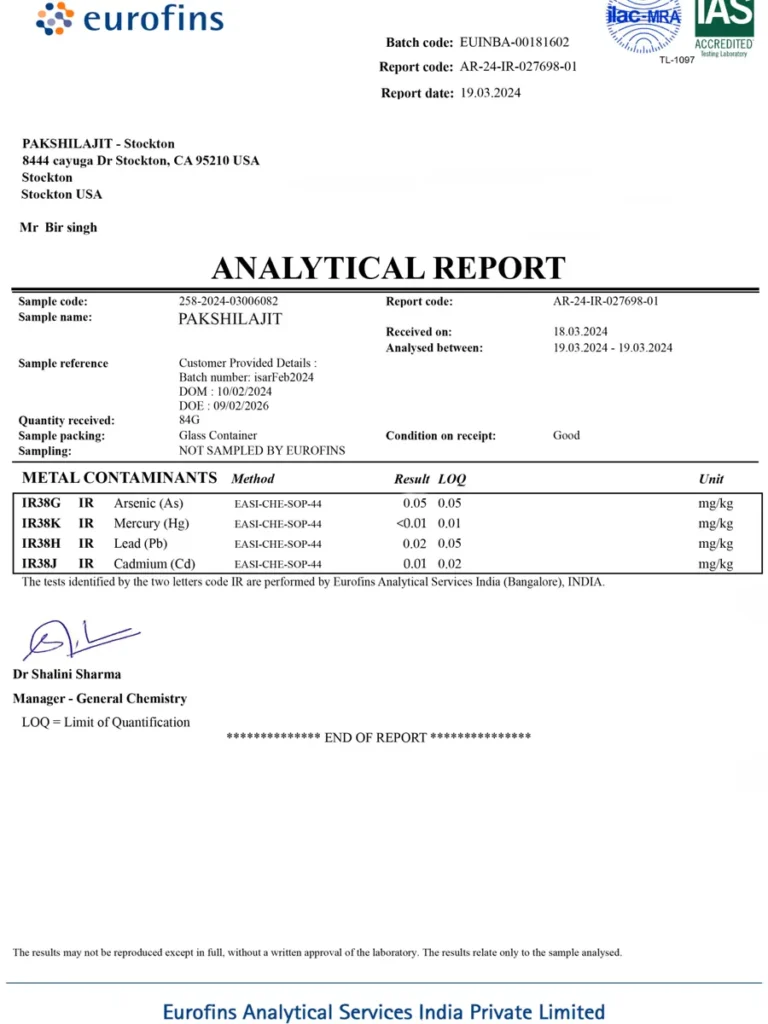
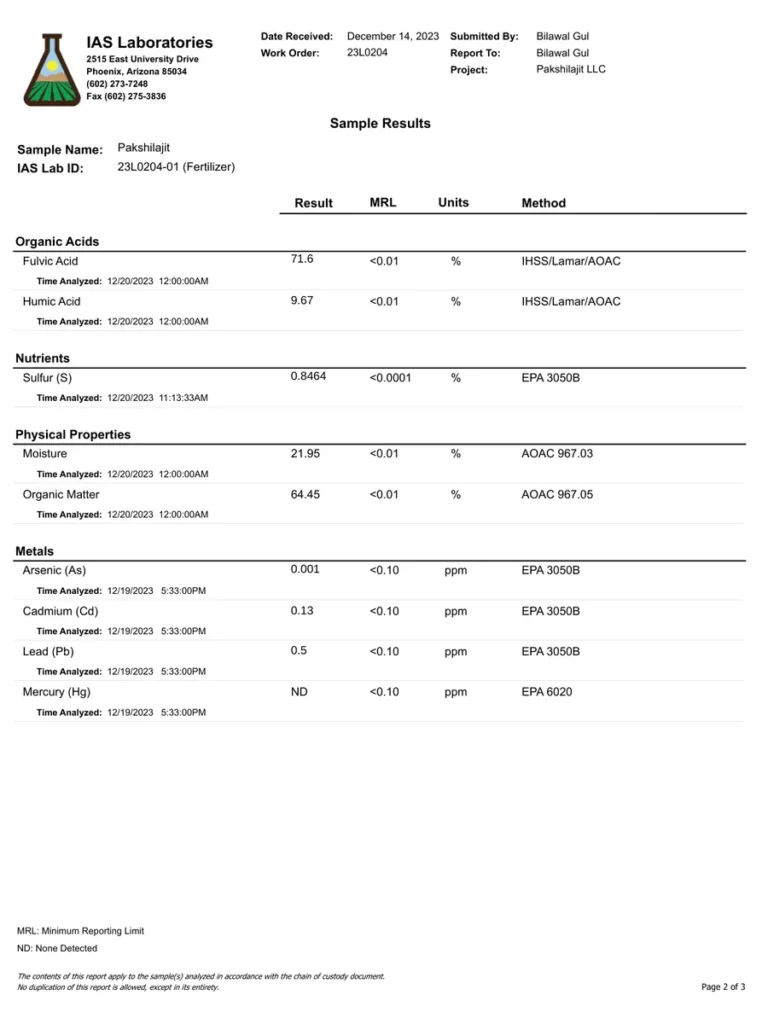
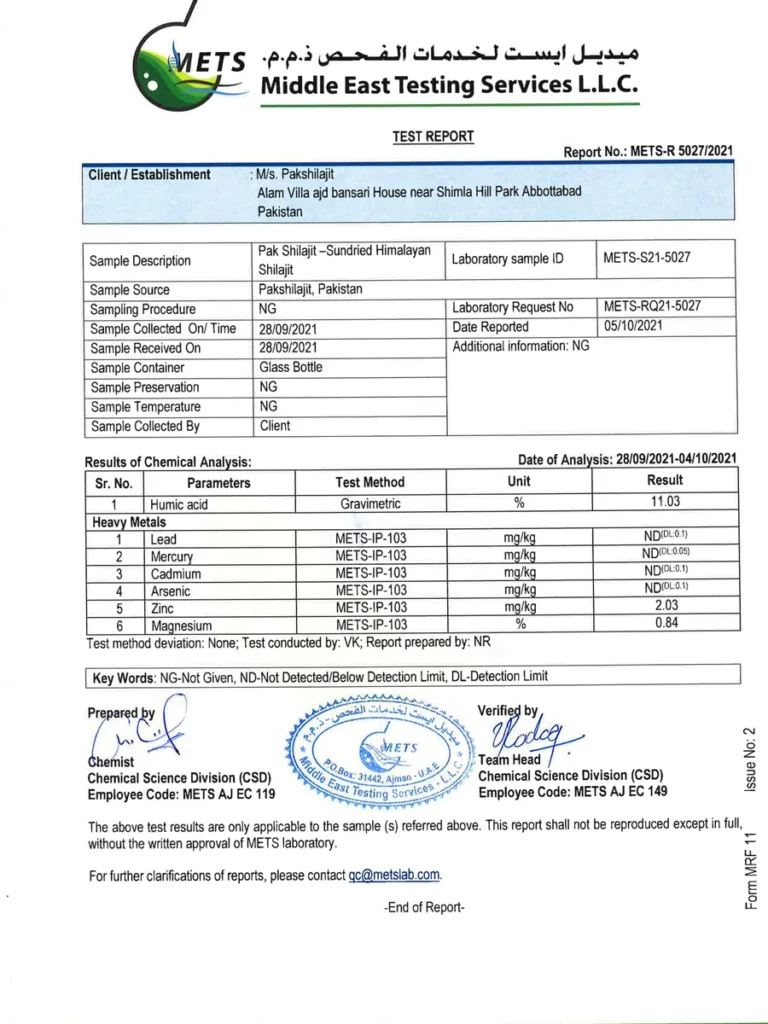
One number in there is worth pausing on. The American fulvic panel reads 71.6 percent — not the 85 or 90 some labels promise. Real shilajit sits inside the natural range, and we published the figure anyway. That is the difference between a lab report used as evidence and a lab report used as decoration.
GMP, FDA and ISO
Plenty of labels carry these three abbreviations as decoration. Here they are as documents instead, from the facility in Abbottabad where every jar is actually made.
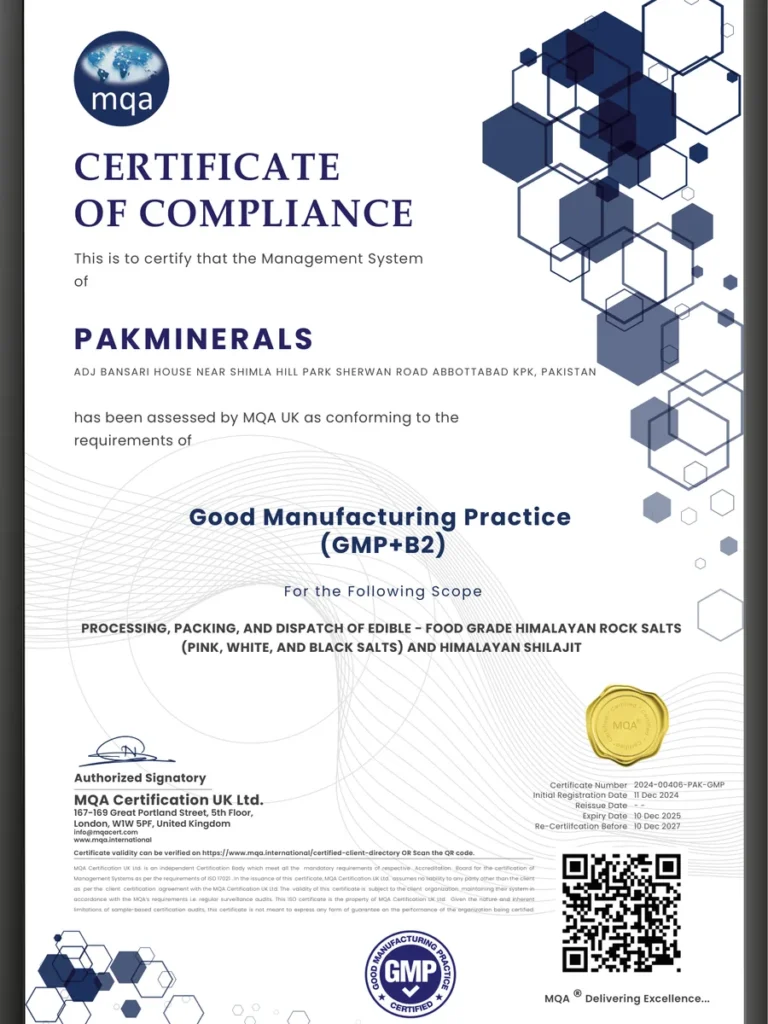
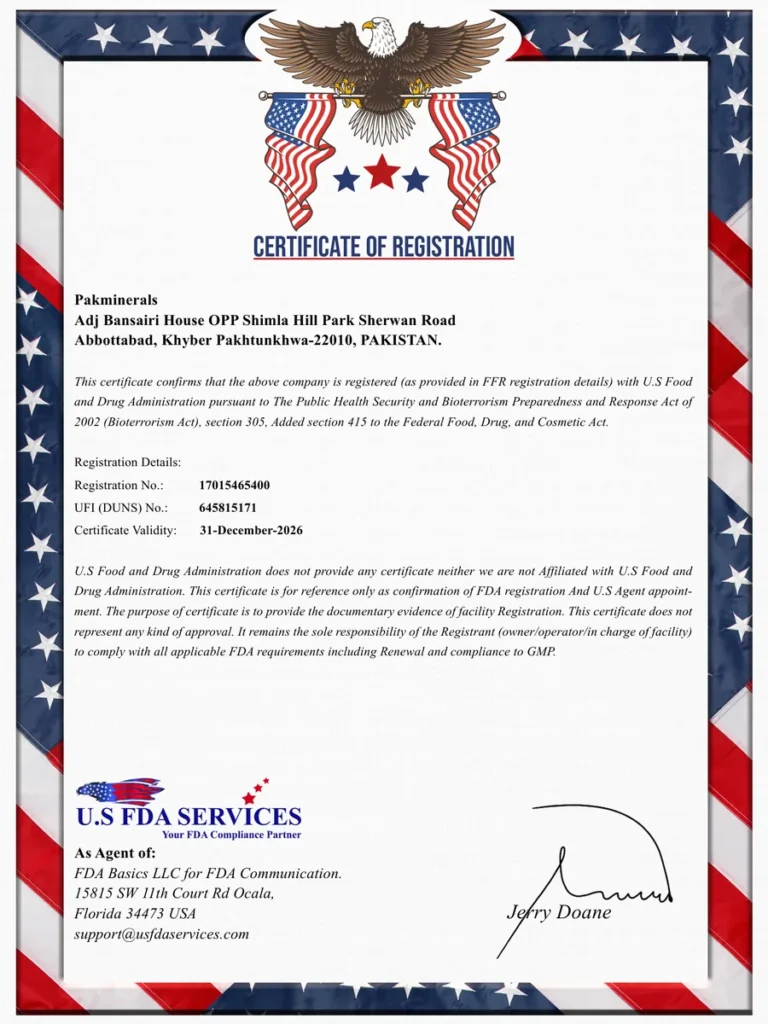
The name on these certificates is Pakminerals. That is our parent company in Pakistan and the registered manufacturer behind the Abbottabad facility where Pak Shilajit is made — same building, same drying beds, same people. You will find Himalayan shilajit named in the GMP scope itself.
What the three actually mean, in one breath each. GMP is about how the facility runs on an ordinary Tuesday: hygiene, records, traceability, the boring discipline that decides whether a good batch is luck or routine. ISO means an outside auditor walks through and checks the quality system against an international standard, then comes back and checks again.
And FDA deserves the honest sentence almost nobody prints: supplements are never FDA-approved. No shilajit on earth is. What a serious manufacturer holds is FDA facility registration, which is what you see above. If a brand ever tells you its shilajit is FDA-approved, you have just watched it fail its own trust test.
Questions worth asking about any lab report
Heavy metals such as lead, arsenic, mercury and cadmium, plus microbiology and purity, by accredited independent laboratories. Testing happens before a production run is packed, on the material that actually ships.
Yes, and we would rather you did than take our word for it. Any accredited food-testing laboratory can run a heavy metals and fulvic acid panel on a resin sample. If your result disagrees with ours, tell us and we will look into it properly.
Because the lab is told what the sample is. A clean report proves safety, never origin. Origin is proven by the harvest, the raw material, the filtration and the drying, which is why we publish all four. See how our shilajit is made.
Our promise
Zero fillers. Nothing added, nothing taken away. Nature made this over centuries, and our only job is to keep it that way between the mountain and your jar — no heat, no chemicals, no shortcuts.
Your body is built to take minerals from natural sources, not synthetic ones. That's the whole reason we do it the slow way. Your health matters to us more than our production speed does.