
How real shilajit is made
Anyone can print Himalayan on a jar, and plenty of factories do. What no factory can print is the climb. This page walks the whole road, from a rope on a rock face at 17,000–18,000 ft to a jar leaving Abbottabad, with evidence at every stage. Read it before you buy from anyone. Including us.
A lab report cannot tell you it is shilajit
When we send a batch for testing, we tell the lab it is shilajit. Read that sentence again, because it is the quiet truth of this whole industry: the lab takes our word for it. Their instruments measure heavy metals such as lead and arsenic, plus microbes and contaminants. No instrument answers the only question you actually have, which is whether the black resin in the jar ever came out of a mountain.
That gap is exactly where lab-made shilajit lives. A paste assembled in a factory passes a heavy-metals screen easily, often more easily than the real thing, because it never spent centuries inside mineral rock. A spotless report on a synthetic product is not a contradiction. It is the expected result.
So take a lab report for what it is: proof a product is safe, never proof it is real. We publish ours for every batch, and we will tell you plainly that the report is the smallest part of the evidence. The four larger parts are below.
Harvest
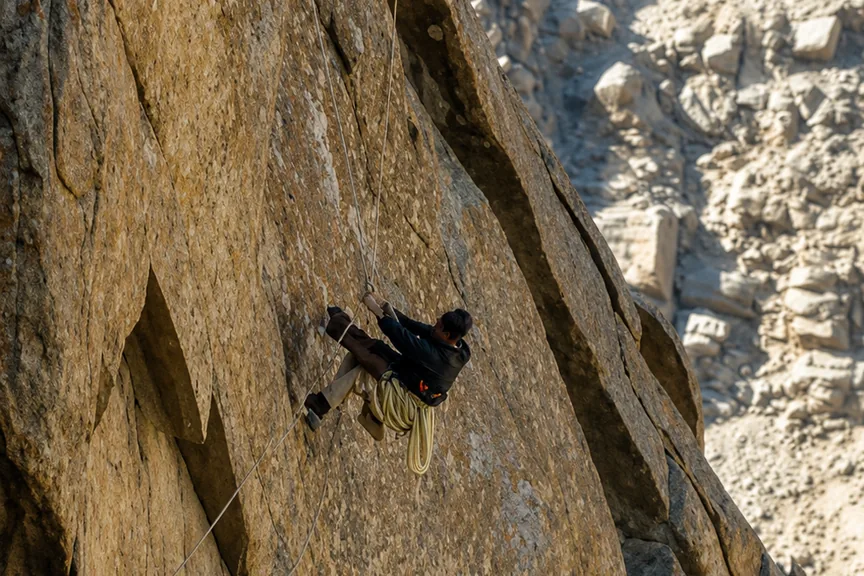
Summer warms the rock enough for shilajit to seep out of the high faces, and that is the whole season. Our harvesters, mostly the same families every year, climb with ropes and scrape the raw shilajit off by hand.
There is no machine for this and no road up. In a good season the teams bring close to 500 kg of raw shilajit down from those faces, one pack at a time. The photograph on this page is that harvest, in those mountains, not an image bought from a stock library.
That is your first check with any seller: ask to see harvesting actually happening. A brand that buys paste by the drum has nothing to show you.
Raw material
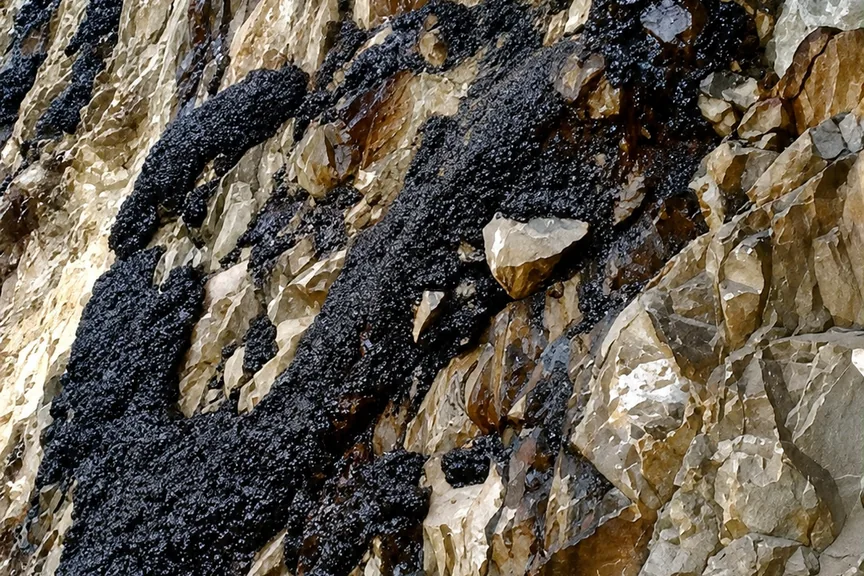
What comes down the mountain is not the finished product. It is stone with dark shilajit running through it, mixed with the grit it came out with, and it looks exactly like what it is.
Quality shows before any lab gets involved. Dense, resin-rich seams with the rare golden-red tint sit at the top of the grading scale. Dull, crumbly material sits at the bottom. We photograph our stones because we own them and we can. Ask any seller to show you theirs.
This is the second check, and it filters out most of the market on its own. Nobody can photograph raw material they have never seen.
Purification
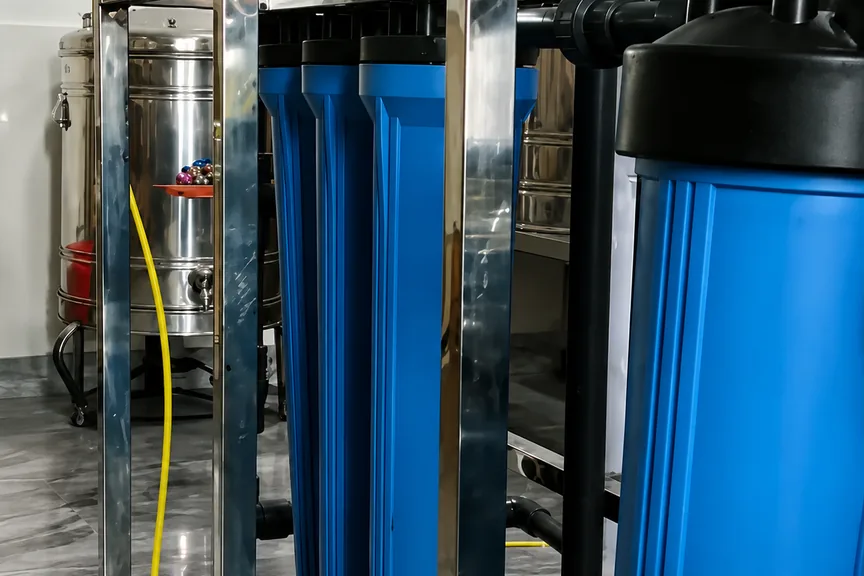
The raw stones are washed and purified the traditional way: Triphala first, then ultra UV, then nano filtration. A batch takes about a week to move through the line.
Two rules hold through the entire stage. No heat, ever. Nothing artificial, ever. Water, herbs, filters and patience take the rock and grit out, and the shilajit itself is never altered on the way through.
Third check: ask how a product was filtered. If the answer involves heat or chemical shortcuts, the drying stage below explains what that costs.
Sun-drying
Nearly every jar of shilajit on the market was dried fast, over open fire or in an industrial oven, because heat finishes in hours what the sun needs weeks to do. The label never mentions it.
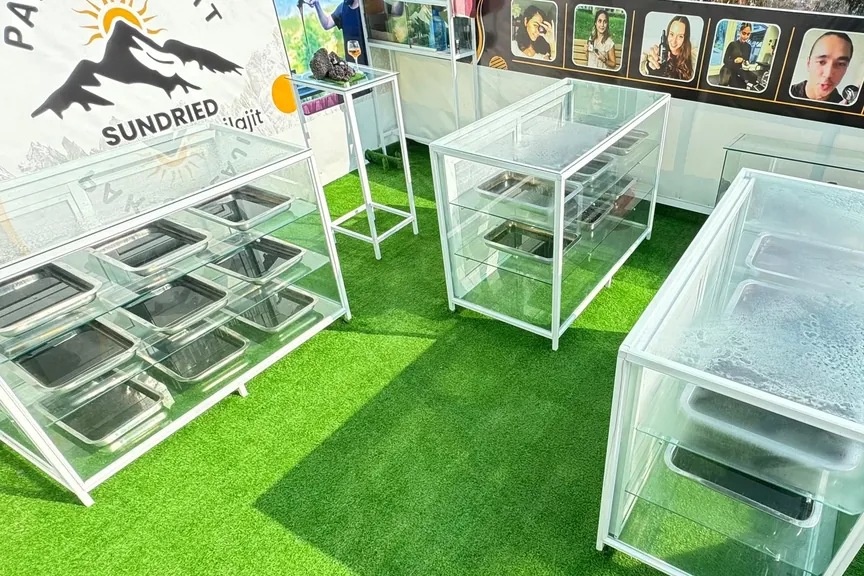
Ours dries on open-air glass beds in Abbottabad: 45–70 days for resin, 100 to 120 days for the powder that fills capsules. Somebody turns those trays by hand the whole time. It is slow, it does not scale, and it is honestly a pain for us. It is also why the heat-sensitive compounds people take shilajit for are still in the jar at the end, and why the fulvic acid in it is the mountain's own, not a top-up.
Fourth check, and the hardest one to fake: ask to see the drying. A fire-dried paste has no drying beds to photograph and no seventy days to account for.
The fulvic acid race is a trap
Scroll any marketplace and you will see jars shouting fulvic acid 80%, 85%, even 90%. Here is what those labels leave out: fulvic acid is sold in bulk as a raw ingredient, and any factory can stir more of it into a paste until the number looks impressive.
Natural shilajit does not reach those numbers. Straight off the mountain it typically tests between 50–75% fulvic acid, and the figure moves with the season and the face it came from. That is not a weakness. That is what unaltered looks like.
So when a jar promises more fulvic acid than mountains put into shilajit, you are not looking at a stronger product. You are looking at an additive. Ask sellers for harvest photographs instead of percentages.
Serving size is a question of purity
Our resin serving is 300mg. Much of the category recommends a full gram. That difference is worth sitting with for a moment.
We keep the serving small because nothing was added at any stage, so there is nothing to dilute. When a product needs a full gram to be worth taking, the fair question is what fills the rest of it.
Small serving, nothing added, slow drying. Those three facts are the same fact, seen from three sides.
Ask every seller for the same four proofs
Shilajit is having its influencer moment. Every week another face holds a jar up to a camera and calls it the best on earth. Some of those jars are real. Most have a story nobody filmed.
So make the four checks a habit before any money moves: evidence of harvesting, evidence of raw material, evidence of filtration, evidence of sun-drying. Every stage of ours is on this page and in the film below. Hold every other seller to the same standard. Hold us to it too.
All four stages, on film
The same climb, wash and drying beds you just read about, filmed at our own sites. Use the chapters to jump to any stage.
Chapters
We do all four ourselves
10 years, our own harvest, our own Abbottabad, Pakistan facility. No importer, no white-label broker, no paste bought by the drum and relabelled.
Our promise
Zero fillers. Nothing added, nothing taken away. Nature made this over centuries, and our only job is to keep it that way between the mountain and your jar — no heat, no chemicals, no shortcuts.
Your body is built to take minerals from natural sources, not synthetic ones. That's the whole reason we do it the slow way. Your health matters to us more than our production speed does.