
The short answer
Six home tests will tell you something about a jar of shilajit, and not one of them is conclusive. The water test is the most useful: real resin dissolves fully into an even golden-brown with no grit and no oily film. What actually settles it is evidence — harvesting, raw material, filtration, sun-drying, and a lab report you can tie to your own jar.
The 60-second version
That feeling is not your fault. This is a category where the product is a black paste, the packaging all says the same four words, and the standard proof of quality is a PDF that anyone can generate. You are not being paranoid. You are being reasonable.
So here is the honest version, from someone who harvests and dries this material for a living.
There are six tests you can run tonight, in your kitchen, with things you already own. Every one of them is useful. Not one of them is conclusive. Anybody who tells you their single test proves purity is selling something, and usually it is the test.
| Test | What you do | Real resin | Suspect |
|---|---|---|---|
| Water | Drop a pea-sized piece in warm water | Dissolves fully, even golden-brown | Grit, cloudiness, oily film |
| Temperature | Leave it cold, then warm it in your hand | Firms in cold, softens in warmth | Identical at every temperature |
| Stretch | Warm a small piece, pull it | Stretches | Snaps like glass |
| Smell and taste | Smell it, touch a grain to your tongue | Mineral, earthy, sharply bitter | Sweet, burnt, or chemical |
| Burn | Hold a small piece to a flame | Chars, bubbles, mineral ash | Melts like wax, thick soot |
| Alcohol | Stir a piece into spirits | Barely dissolves | Dissolves readily |
None of these is proof. All six together get you a long way. Start with the water.
Test 1. The glass of water
This is the one worth doing. It takes five minutes and it catches most of what is wrong with the cheap end of this market.
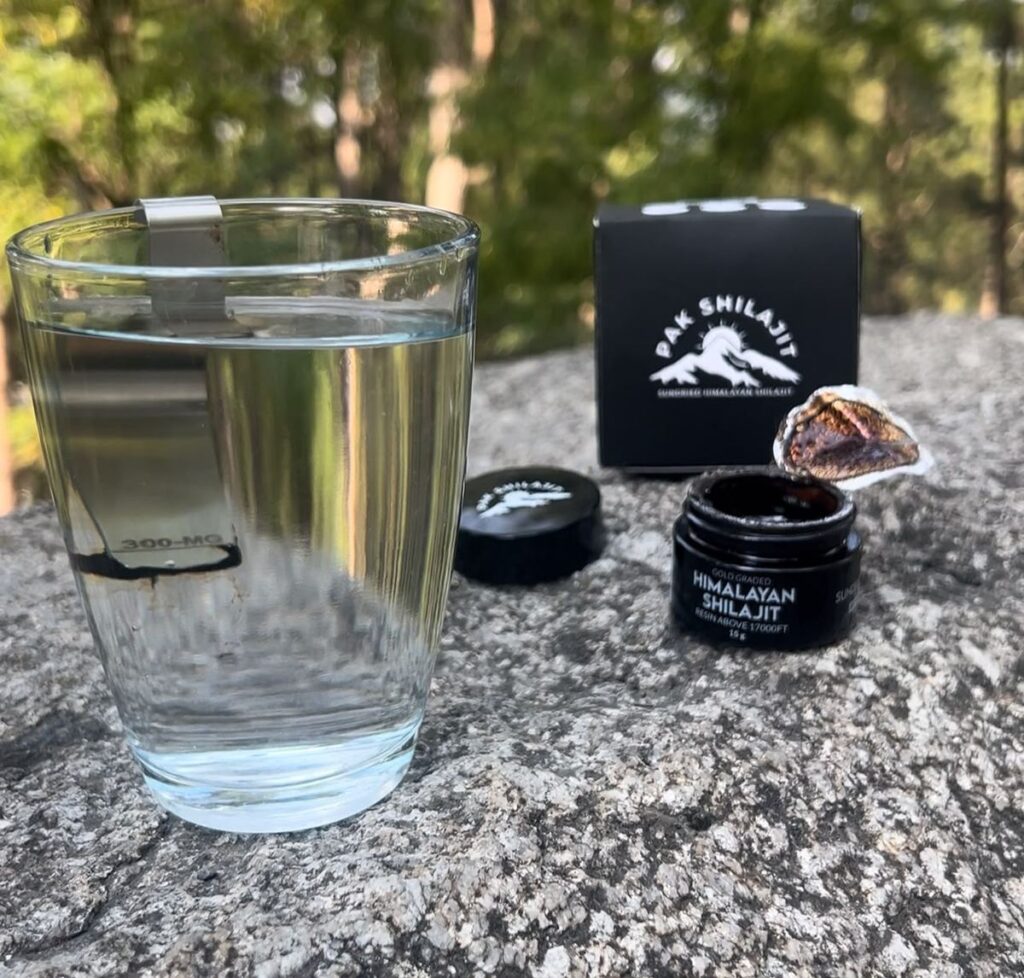
How to run it. Break off a piece about the size of a pea. Drop it into a glass of warm water, not boiling. Leave it. Stir once after a couple of minutes if you are impatient.
What you are watching for. Real resin surrenders. It sends a dark ribbon down through the water, the colour spreads, and after a few minutes you are left with an even golden-brown liquid. Hold it to the light. It should be translucent, not muddy.
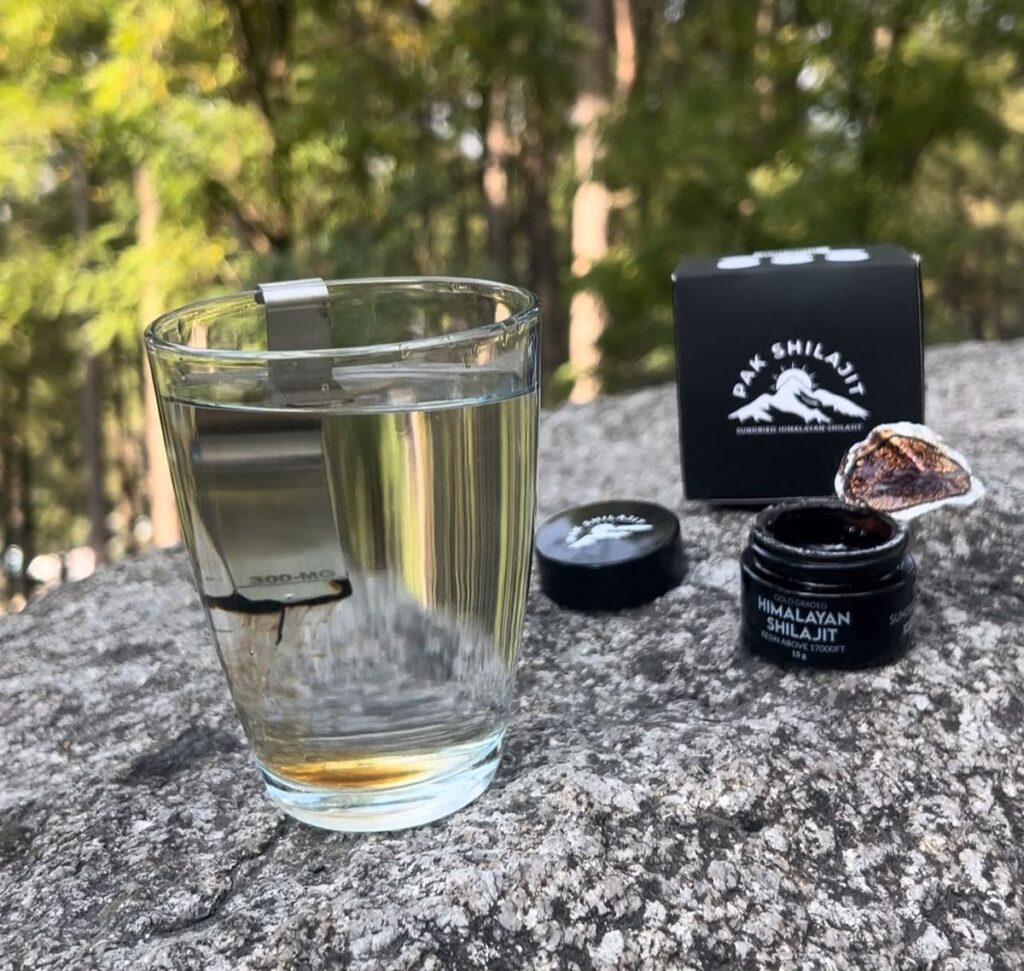
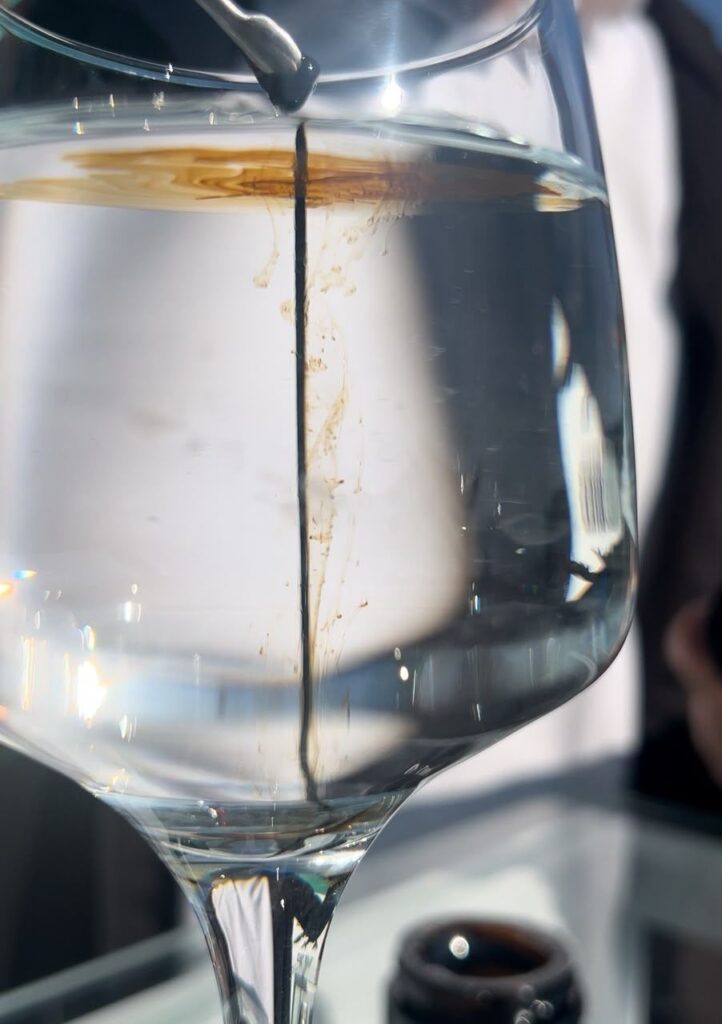
What fails. Grit on the bottom that will not go. An oily film sitting on top. Water that goes cloudy grey-brown instead of clear amber. Lumps that sit there after ten minutes doing nothing.
Grit usually means sand, clay or unfiltered rock came along for the ride. An oily film usually means something was added to bulk it out.
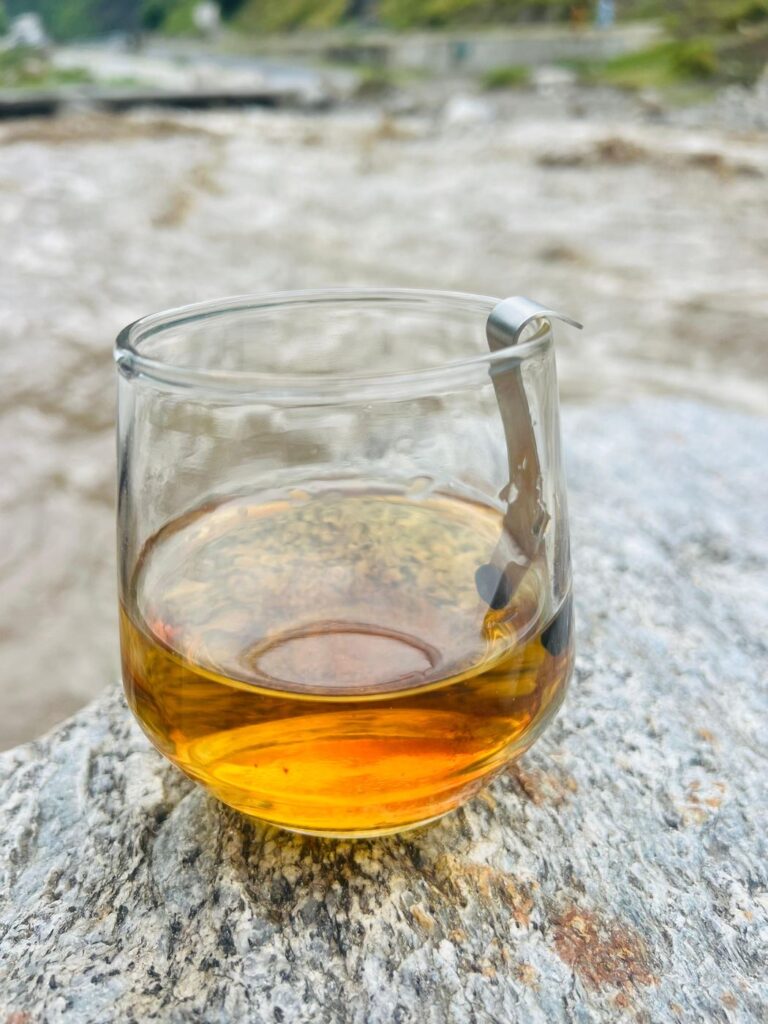
What it does not prove. A well-made fake dissolves beautifully. If somebody blends bought-in fulvic acid into a soluble base, it will pass this test every single time, and look better doing it than the real thing. The water test rules things out. It cannot rule anything in.
Test 2. Temperature
Real resin is alive to temperature in a way that manufactured pastes are not.
Leave the jar somewhere cool for an hour. It should stiffen, going hard and slightly brittle. Then work a piece between your fingers. Body heat alone should soften it back into something pliable and tacky within a minute.
What fails. A paste that feels identical straight out of the fridge and after five minutes in your palm. That consistency usually comes from a stabiliser doing the work.
What it does not prove. Water content changes how a resin behaves, and so does how recently it was dried. A slightly firmer jar in January is not a scandal. This is a hint, not a verdict.
Test 3. Stretch
Same principle, different hand.
Warm a small piece and pull it slowly. Real resin gives. It stretches into a thread before it lets go, the way warm toffee does.
Heat-dried material tends to be brittle and glassy. It snaps.
What it does not prove. Plenty of things stretch. Wax stretches. This test tells you about processing rather than authenticity, which is genuinely useful, because heat-drying is one of the most common shortcuts in this business. It just is not the same question as whether this is shilajit at all.
Test 4. Smell and taste
Trust your nose before you trust a label.
Real shilajit smells mineral and earthy, a bit like wet stone after rain, with a faint smokiness. The taste is sharply bitter with a metallic finish. It is not pleasant. It is not supposed to be.
What fails. Sweet is the loudest alarm in this whole article. Nothing about this material is sweet, so sweetness means something was added. Burnt or acrid usually means heat was used to dry it fast.
What it does not prove. Taste is subjective, your morning coffee interferes with it, and a skilled blender can get the bitterness roughly right. Useful for catching the obvious, useless for certifying the good.
Test 5. The burn test
You will see this one everywhere, usually presented as the definitive answer. It is not. But you asked, so here is what actually happens and what it is worth.
How to run it. Hold a small piece with tweezers over a flame for a few seconds.
What you tend to see with real resin. It chars rather than melts. It may bubble and hiss, because there is water bound up in it. It does not produce a steady, greasy flame. What is left behind is a small amount of mineral ash.
What tends to fail. Material that melts smoothly like a candle and burns with a thick sooty flame. That behaviour points at wax or oil in the mix.
Why it is not the proof people claim. This is the test we get asked about most, and the honest answer is that it is the weakest of the six. Burn behaviour changes with moisture, with how big your piece is, with how long you hold it there. Different real batches behave differently. Adulterated pastes have been known to char convincingly. And every result is a judgement call made by someone who has probably never watched a known-genuine sample burn, so there is nothing to compare against.
Run it if you want. Do not buy or bin a jar on the strength of it.
Test 6. The alcohol test
Stir a piece into a small glass of spirits.
Shilajit is water-soluble and largely alcohol-insoluble, so real resin should mostly refuse to dissolve. Material that disappears readily into alcohol has probably been cut with a resin or gum that does dissolve there.
What it does not prove. Alcohol strength changes the result, and so does temperature and how hard you stir. It is a rough signal, not a measurement. Treat it the way you treat the burn test: interesting, not decisive.
What all six have in common
Every test above looks at the material. None of them can look at the history.
They cannot tell you which mountain it came off, or whether it came off a mountain at all. They cannot tell you whether it was dried in the sun over weeks or in an oven over an afternoon. They cannot tell you whether the jar in your hand has any connection to the lab report on the website.
That is not a small gap. That gap is the entire fraud.
Synthetic fulvic acid is sold commercially, by the kilo, to anyone who wants it. Blend it into a dark, soluble base and you get something that dissolves cleanly, tastes bitter, stretches when warm and chars in a flame. It will pass all six of your tests. It was built to.
So the tests are where you start, not where you finish.
Why the certificate everybody asks for proves so little
The usual answer to all of this is to ask for the lab report. Reasonable. Also not enough, for three reasons the industry would rather not discuss.
The laboratory is told what the sample is. When we send ours, we say this is shilajit, and the lab measures what we asked it to measure. No instrument on earth certifies that a paste came out of a mountain. A factory-made paste can clear a heavy-metals screen more easily than the real thing, precisely because it never spent centuries inside mineral rock.
A report with no batch number is a report about somebody else's product. This is the one to check first, and almost nobody does. If the PDF does not carry a batch or lot number, and the seller cannot tell you which batch your jar came from, that document is describing material you will never receive.
The fulvic number is the easiest thing on the page to fake. Fulvic acid is a purchasable ingredient. A label shouting 85% is trivial to manufacture. Real shilajit typically tests somewhere between 50–75%, and the figure moves with the season and the rock face. Ours reads 71.6% on the IAS Laboratories report, and that is the only fulvic figure we publish anywhere, because a brand that quotes one number on the website and a different one on the certificate has told you everything you need to know.
None of which makes lab reports worthless. They are necessary. They are simply not sufficient, and this category has spent a decade pretending otherwise because a PDF is the cheapest proof there is.
Proof 1. Evidence of harvesting
Stop asking sellers whether their shilajit is pure. They will say yes. Ask them for these five things instead, and watch what happens.
Ask where it was collected, and ask to see it. Not a stock photograph of a mountain range. The actual rock face, the actual person working it, on a date.
Ours comes off faces at 17,000–18,000 ft, hand-scraped by families who have worked those routes for generations and carried down on foot. For scale, they bring close to 500 kg of raw shilajit down in a season, one pack at a time.
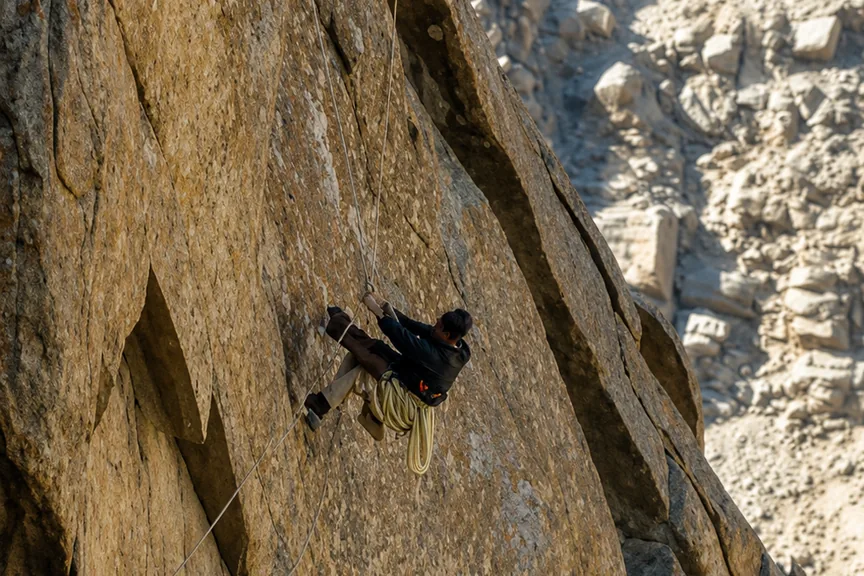
What to ask: which valley, what altitude, which month, and can I see it. A seller who buys from a broker cannot show you this, because they have never seen it either.
Proof 2. Evidence of the raw material
Raw shilajit does not arrive looking like the jar. It comes down as heavy, crusted black rock, still carrying the mountain it grew in.
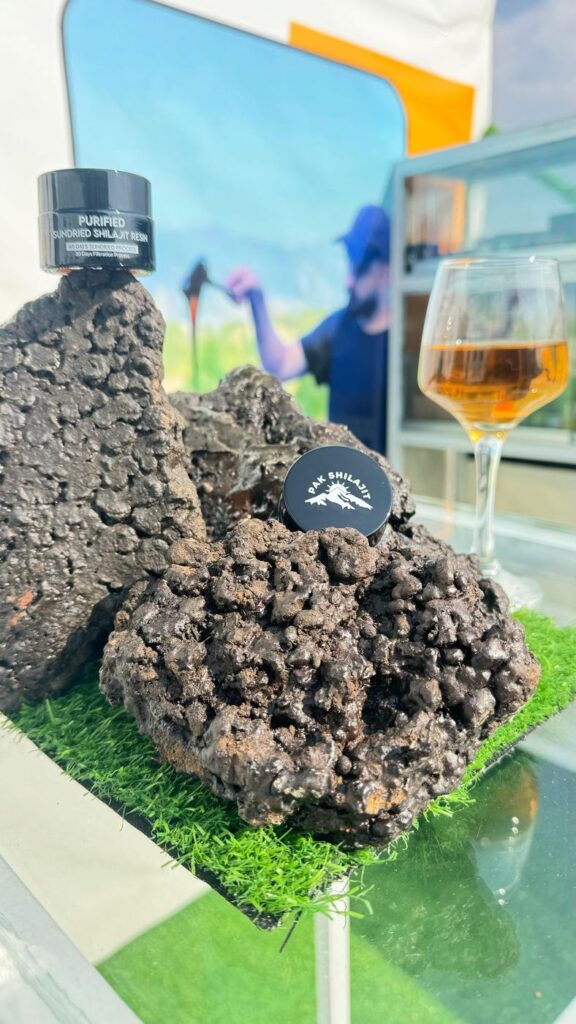
Quality also shows before any lab gets involved. Dense, resin-rich seams carry the rare golden-red tint that graders look for first; dull, crumbly material sits at the bottom of the grade.
If a seller can only ever show you the finished paste, ask why. Everyone who genuinely processes their own material has photographs of the ugly stage, because they have stood next to it. Most brands have never seen their own raw material, because they never had any: they bought a finished paste from a broker, in a drum, already purified by somebody they have never met.
Proof 3. Evidence of filtration
This is where most of the shortcuts happen, and where almost nobody publishes anything.
Ours runs through Triphala, ultra UV and nano filtration over about seven days, which is what takes it from rock to something you would put in water. Nothing is added at this stage and nothing is extracted. The rock and plant matter comes out; the shilajit stays what it was.
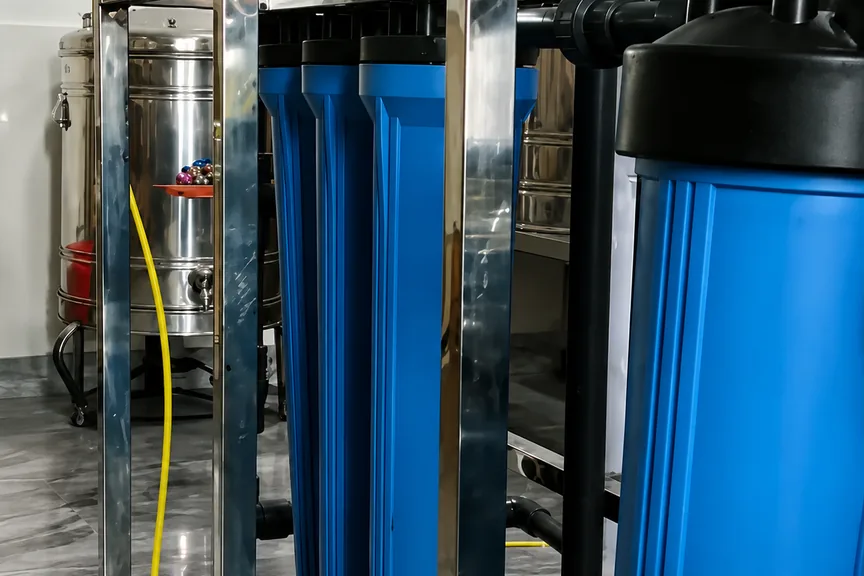
Two rules should hold through the whole stage, at any facility: no heat, ever, and nothing artificial, ever. Water, herbs, filters and patience do all of the work. Ask any seller what their filtration actually is. Vagueness here is the answer.
Proof 4. Evidence of drying
Heat is fast. The sun is slow. That single difference separates most of this market, and it is the one nobody can fake quickly.
Our resin is sun-dried for 45–70 days in open trays in Abbottabad. Not an oven, not a spray-dryer, not an afternoon. A fire or an industrial oven does the same job in a few hours, and the difference does not show up in a photograph.
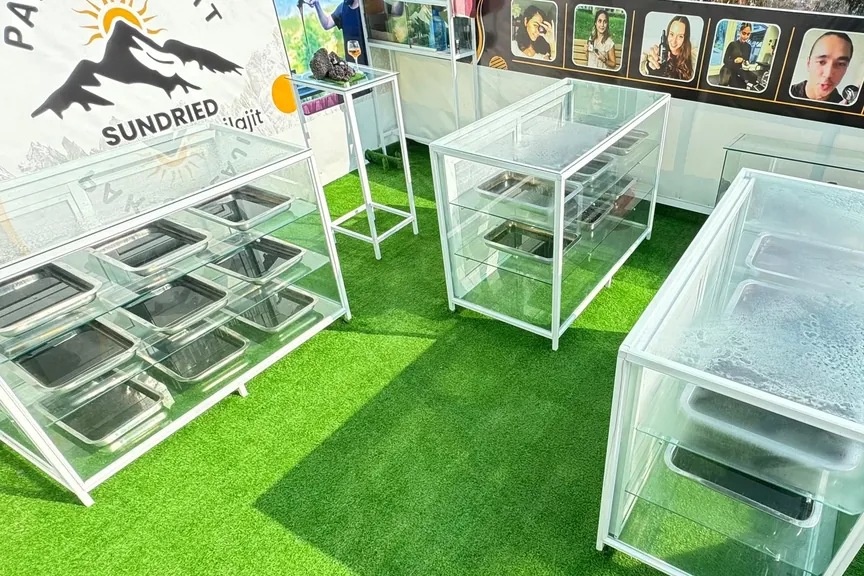
Almost nobody discloses their drying method, because there is no rule saying they must. So ask. A seller who cannot say how long their drying takes is telling you it was quick.
Sun-dried against heat-treated, in fullProof 5. A lab report you can actually tie to your jar
Now the certificate becomes useful, because you finally have context for it. Most people never read one properly, so here is how, using our own reports rather than a hypothetical.
Start with who signed it. The name of the laboratory matters more than the numbers, because an unaccredited lab will measure whatever it is paid to measure. Accreditation codes are the shorthand: ISO/IEC 17025, ILAC-MRA, COFRAC. If there is no lab name and no accreditation on the page, stop reading, there is nothing there.
We hold seven reports from six laboratories on three continents.
| Date | Product | Laboratory | What it measured |
|---|---|---|---|
| Feb 2026 | Drops | Qarshi Research International, Pakistan (ISO/IEC 17025) | Arsenic, cadmium, lead, mercury |
| Feb 2026 | Gummies | Qarshi Research International, Pakistan (ISO/IEC 17025) | Arsenic, cadmium, lead, mercury |
| Dec 2025 | Resin | Eurofins, Australia | Arsenic, cadmium, lead, mercury |
| Mar 2025 | Resin | Laboratoire Départemental de la Haute-Vienne, France (COFRAC) | Microbiology, 8 parameters |
| Mar 2024 | Resin | Eurofins Analytical Services, India (ILAC-MRA) | Arsenic, mercury, lead, cadmium |
| Jan 2024 | Resin | IAS Laboratories, USA | Fulvic and humic acid, metals |
| Oct 2021 | Resin | Middle East Testing Services, UAE | Humic acid, heavy metals |
Note the March 2025 one. It is not a metals test at all. It is eight microbiology parameters run by a French departmental laboratory, checking for the things that grow in a product rather than the things mined into it. Most brands in this category never test for that, because nobody asks.
Then read the numbers, and know what the units mean. The December 2025 Eurofins report on our resin reads: arsenic 0.50, cadmium 0.020, lead 0.70, mercury 0.003, all in mg/kg.
A milligram per kilogram is one part per million. Some labs print ppm instead, which is the same thing wearing a different hat. Our January 2024 IAS report uses ppm, which is why arsenic there reads 0.001 rather than a number that looks comparable. Two reports, two units, and a reader who does not know that will think one batch was a thousand times dirtier than the other.
Know what "not detected" really means. It does not mean zero. It means the concentration sat below the lowest level that instrument could see. A more sensitive machine might have found something. It is an honest result and a good one, but a brand that translates it into "zero heavy metals" on a product page has quietly upgraded the finding, and that tells you how they treat every other number.
Then check four things, in this order.
- Is the laboratory named, and is it accredited?
- What is the date, and which product is it actually for? A report on capsules tells you nothing about the resin.
- Which batch does it describe, and is that your batch?
- Does the fulvic figure on the report match the figure the brand advertises?
Number four catches more brands than the other three combined. Ours reads 71.6% on the IAS report, and that is the only fulvic figure we publish anywhere. Go and compare a few homepages against the PDFs they link to. You will find gaps.
And here is where we fail our own test. Our jars do not carry a printed batch number. That is the honest position, and it is the weakest link in the chain we have just described.
What we do instead: your order number tells us which production batch your jar was packed from, so send it to us and we will send you that batch's report. It works, and it is worse than printing the lot on the jar, which is what the best version of this looks like.
Five of our seven reports also carry no lot number, because the laboratory did not print one. Where a lot exists we publish it, and where it does not we say "not stated on report" rather than inventing something that looks tidier.
We are telling you this because a page arguing that you should demand evidence has no business hiding its own gaps. Ask us for your batch report. Ask everyone else for theirs too, and notice who goes quiet.
All seven reports, as the labs issued themThe counterfeit almost nobody names
There is a specific fake worth knowing about: ozokerite, a naturally occurring mineral wax. It is dark, it is waxy, it comes out of the ground, and it is cheap.
It is convincing to look at. It behaves differently, though, and your tests will catch it. It resists water instead of dissolving into it, often leaving a film. Under a flame it melts and runs the way a candle does rather than charring.
This is the case where the home tests earn their place. Ozokerite is a physical substitute, and physical tests catch physical substitutes. It is the well-engineered fulvic blends they cannot touch.
So what should you actually do
If you already own a jar: run the water test tonight. If it dissolves clean, you have ruled out the crude fakes, which is genuinely worth knowing. Then go and look at what the seller publishes about harvesting, filtration and drying. That is the part that tells you what you bought.
If you are still choosing: skip the tests entirely and start with the evidence. Pull up three brands and ask each of them for harvest photographs with dates, a description of their filtration, their drying time, and a lab report carrying your batch number.
Most will not answer. That is your answer.
Questions people also ask
No seller can honestly promise 100%, and a brand claiming it is telling you something about their marketing rather than their material. Shilajit is a natural phytocomplex, so its composition varies by season and rock face. Judge purity by what a brand can evidence: where it was harvested, how it was filtered, how it was dried, and a lab report tied to your specific batch.
Run the water test first, since it costs nothing and catches the obvious fakes. Then verify the history: harvest evidence, filtration method, drying time, and a batch-matched laboratory report. The tests check the material. Only the evidence checks the story.
Rather than trusting a list, apply the five proofs on this page to any brand you are considering. Real ones answer all five without hesitating, because they have the photographs and the reports already. The question separates them faster than any review.
Yes, and this is the uncomfortable centre of the whole problem. Synthetic fulvic acid is commercially available, and a paste built from it is designed to meet the spec, so it tests well by definition. This is exactly why a certificate alone settles nothing.
It chars rather than melting, may bubble because of its water content, and leaves a little mineral ash. But burn behaviour varies with moisture and piece size, and adulterated material has been known to char convincingly. It is the least reliable of the six tests.
In warm water it should, leaving an even golden-brown liquid with no grit and no oily film. In cold water it dissolves slowly, which is normal rather than a fault. Full dissolution is a good sign. It is not proof, because a well-made synthetic dissolves perfectly too.
The opposite. Real resin firms up in the cold and softens in the warm. Stand the sealed jar in warm water for a few minutes if you cannot scoop it.
Earthy, sharply bitter and faintly smoky, with a distinctly mineral finish. That is the correct answer for real resin. Sweetness is the clearest warning sign there is: a shilajit that tastes pleasant on its own has usually been sweetened or diluted to get there.
It refers to the highest-altitude, highest-purity material from a harvest. It is a supplier term rather than a regulated standard, so it helps only when the seller can also answer the five proofs. How to choose the best shilajit turns the proofs into seven checks you can run on any jar.
It is a phytocomplex of humic substances, fulvic acid and trace minerals that forms in mountain rock over a very long time. Nothing is grown and nothing is added. If an ingredients list runs longer than one line, you are not looking at pure resin.